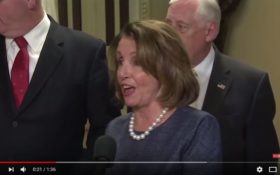
Liberals are demanding a video of House Speaker Nancy Pelosi — which shows the Democratic leader slurring her words — be banned on social media. In response, Facebook has caved and “downranked” the video, a behind-the-scenes move intended to limit its spread.
Pelosi derided Facebook Wednesday for not taking down the video even though she says it is false.
The video was shared by President Donald Trump on Friday. The video was allegedly was altered to portray the Democratic leader as drunk at a press conference —
“PELOSI STAMMERS THROUGH NEWS CONFERENCE” pic.twitter.com/1OyCyqRTuk
— Donald J. Trump (@realDonaldTrump) May 24, 2019
Some civil libertarians warn that Facebook could evolve into an unaccountable censor if it’s forced to make judgment calls on the veracity of text, photos or videos.
Facebook has long resisted making declarations about the truthfulness of posts that could open it up to charges of censorship or political bias. It manages to get itself in enough trouble simply trying to enforce more basic rules in difficult cases, such as the time a straightforward application of its ban on nudity led it to remove an iconic Vietnam War photo of a naked girl fleeing a napalm attack. (It backed down after criticism from the prime minister of Norway, among others.)
But staying out of the line of fire is harder than it used to be, given Facebook’s size, reach and impact on global society. The social network can’t help but run into controversy given its 2.4 billion users and the sorts of decisions it must make daily— everything from which posts and links it highlights in your news feed to deciding what counts as hate speech to banning controversial figures or leaving them be.
Republican politicians and other conservatives, from President Donald Trump to Fox News personalities, have been trumpeting the charge that Facebook is biased against conservatives.
Twitter hasn’t removed the doctored Pelosi video (yet), and declined comment on its handling of it.
But YouTube yanked it down under political pressure.
As of Wednesday, the video shared on Facebook by the group Politics Watchdog had been viewed nearly 3 million times and shared more than 48,000 times.
By contrast, other videos posted by this group in the past haven’t had more than a few thousand views apiece.
The Associated Press contributed to this article