
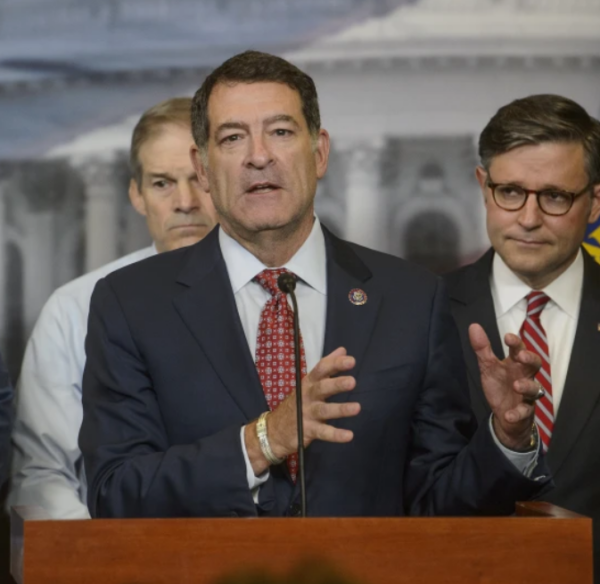
Tennessee Rep. Mark Green suddenly resigned from Congress on Friday to pursue an unnamed business opportunity, narrowing Republicans’ already razor-thin House majority and complicating President Donald Trump’s legislative agenda heading into the fall.
Green, a retired Army officer and Homeland Security Committee chairman, made his resignation effective July 20, reducing the GOP’s House majority to 219-212 at a critical time when Speaker Mike Johnson can afford few defections on key votes.
“It’s with a heavy heart that I say farewell,” Green said in a statement. “To my constituents across Tennessee’s 7th District—thank you. The trust you put in me is humbling. I will look back fondly on my years of serving as your voice in Washington.”
Green has remained vague about his next career move, offering only cryptic hints about his future plans.
“While I cannot give the details here, I will be doing something specifically designed to help America compete against the CCP [Chinese Communist Party], but this time in business,” Green explained in his resignation video posted on social media.
The mystery surrounding Green’s departure deepened after reports last month linking him to lobbyists connected to the South American country of Guyana. Green declined to provide specifics about his private sector plans.
Take a look —
It's with a heavy heart that I say farewell.
To my constituents across Tennessee’s 7th District—thank you. The trust you put in me is humbling. I will look back fondly on my years of serving as your voice in Washington. pic.twitter.com/fwjVMCRtpQ
— Rep. Mark Green (@RepMarkGreen) July 4, 2025
Green’s exit comes at a particularly challenging moment for Republican leadership. Johnson struggled last week to pass Trump’s “One Big, Beautiful Bill,” and the narrow majority gave him little room for defections. With Green’s departure, Johnson has an even narrower path forward.
The situation will likely worsen for Republicans when Democrats fill three House vacancies through special elections this fall. Those seats became vacant after representatives died earlier this year, and Democrats are heavily favored to reclaim all three, further shrinking the GOP majority.
Green won his Tennessee seat in 2018, succeeding current Sen. Marsha Blackburn when she moved to the upper chamber. Blackburn is now considering a potential run for Tennessee governor. A special election will be held to replace Green in the deep red 7th District.
As Homeland Security Committee chairman, Green played a key role in developing border security provisions for the “One Big, Beautiful Bill.” He had previously indicated he would not step down until Republicans passed the president’s signature legislation.
Of course, Green’s time in congress has not been without controversy. Last September, he received national attention when his wife accused him of having an affair and filed for divorce, alleging he was involved with an Axios reporter.
She later retracted the specific allegation. “I want to correct the record, because I misidentified someone in that message. My husband has never had a relationship with a reporter from Axios, and I regret having said that,” she told Politico.
The Tennessee Republican had initially announced he would not seek reelection in 2024 but reversed course about two weeks later, deciding to run again before ultimately choosing to resign mid-term for his business venture.
Green’s departure reflects broader turnover in Congress, including Rep. Mike Waltz of Florida, who left to serve in the Trump administration before stepping down from that role, and Rep. Don Bacon of Nebraska, whose retirement creates an opportunity for Democrats to flip his Omaha-area seat.