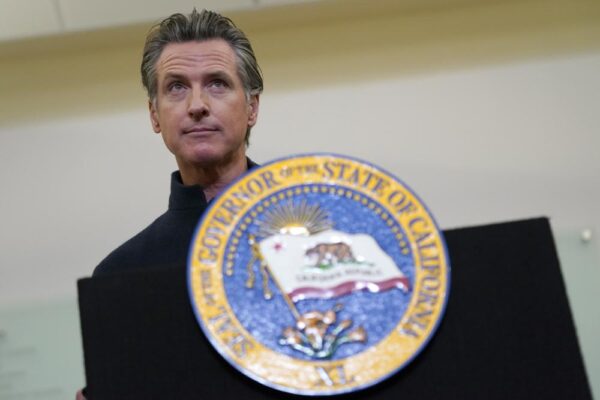
Bad news broke this week for Gov. Gavin Newsom and his presidential ambitions, thanks to his connection to a huge debt scandal.
California businesses are struggling to employ workers under higher federal payroll taxes after the state failed to repay a $20 billion federal loan.
California is the only state in the nation that has not paid its pandemic unemployment debt to the federal government, which it took out under Newsom.
The first Trump administration in 2020 provided the state with a $20 billion loan to cover California’s unemployment costs during COVID-19. California Democratic leaders shut down all schools and most businesses statewide, which resulted in the state’s major need for federal help with unemployment insurance.
Every other state paid the loan back with federal stimulus money, which was a debt-repayment strategy offered by the Biden administration. Newsom chose to hold onto those funds and use them for other debt, instead of putting it toward the loan.
Since Newsom did not pay back the debt within two years, federal law requires the state’s employers to pay. Each employer this upcoming year, regardless of the number of employees they have and whether they are part or full-time, will pay an extra $42 per employee on their payroll taxes because of the debt. In 2027 the number increases to $63 and increases by $21 per employee every year until the debt is paid.
Rob Lapsley, President of the California Business Roundtable, called Newsom’s debt “the greatest hidden tax.”
“So now we’re at $130 per employee, and when you look at the potential penalties of what could be imposed from the federal government, from the Trump administration, if we don’t get a handle on getting this paid off, we could be up well over $400 per employee,” Lapsley said.
“It creates another disincentive to be able to scale and grow jobs here,” Lapsley said.
There are roughly 16.4 million workers, both full- and part-time, in California. That means it will take until at least 2035 to pay back the $20 billion.
California’s debt will reach $23.2 billion by year’s end, according to the state’s most recent report. The state’s also on the hook for more than $600 million a year in interest.
The state currently has the highest unemployment rate in the nation at 5.9 percent.
Lapsley said businesses asked Newsom to use $10 billion in federal stimulus to pay off part of the loan, but that didn’t happen.
“We’re not hopeful at all. There was a deliberate decision by leaders of the state for businesses to pay this,” Lapsley said when it came to whether or not state leaders would pay towards the principal of the loan.
California’s Legislative Analyst Office released a report in December calling the state’s unemployment insurance system “broken.” The report stated that the system “cannot keep up with inflation or provide the intended wage replacement of half of workers’ wages.”
“This outlook is unprecedented: although the state has, in the past, failed to build robust reserves during periods of economic growth, it has never before run persistent deficits during one of these periods,” the report stated.
That’s bad news for Newsom’s national prospects.