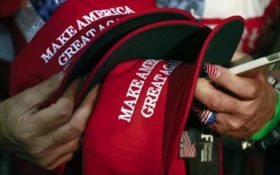
Washington D.C.’s Democratic Mayor Muriel Bowser is quietly breaking with her party and backing some of President Donald Trump’s “Make America Great Again” policies after voter demand.
Bowser is repealing the city’s sanctuary city law, proposing to remove the ban on local police assisting federal agencies with deportations in a dramatic reversal from her previous confrontational stance toward Trump.
Bowser stealthily included the repeal as a tucked-away provision in her newly released 2026 budget proposal, first spotted by journalist Martin Austermuhle.
The move represents a dramatic shift for the Democratic mayor, who previously commissioned a Black Lives Matter mural near the White House and renamed the area “Black Lives Matter Plaza” during Trump’s first term — but recently had it dismantled because the “White House didn’t like it.”
The current sanctuary city law prevents local police from cooperating with Immigration and Customs Enforcement to detain undocumented immigrants. It prohibits D.C. from inquiring about a detained person’s immigration status or releasing them to ICE, and prevents the city from allowing ICE to interview suspects in local custody without a judicial order.
The proposed repeal comes as the Trump administration ramps up illegal immigration deportation efforts. White House officials are pressuring ICE to dramatically increase deportations, with top Trump aide Stephen Miller and Homeland Security Secretary Kristi Noem demanding that immigration agents arrest 3,000 people daily, according to two sources familiar with a tense meeting last week. The new target is triple the number of daily arrests agents were making in the early days of Trump’s term.
Federal agents arrested 189 people in D.C. earlier this month as part of Trump’s multi-agency illegal immigration crackdown in the Washington area. ICE officers also visited several D.C. restaurants in early May, demanding to see employment eligibility papers.
Bowser’s sanctuary city reversal represents the latest example of her evolving relationship with Trump. The mayor has moved dramatically away from her 2020 approach of provoking the president toward a collaborative strategy focused on getting projects accomplished, doing things like removing the controversial BLM street and more.
The transformation began with Bowser visiting Trump at Mar-a-Lago in late December after the election and before the inauguration. Following that Florida meeting, she issued a statement emphasizing cooperation.
“Today, President Trump and I had a great meeting to discuss our shared priorities for the President’s second term,” Bowser said. “President Trump and I both want Washington, DC to be the best, most beautiful city in the world, and we want the capital city to reflect the strength of our nation. We discussed areas for collaboration between local and federal government, especially around our federal workforce, underutilized federal buildings, parks and green spaces, and infrastructure.”
Since then, Bowser has worked with Trump and the Washington Commanders on a stadium deal for the site of the old RFK Stadium. She also visited the Oval Office to thank Trump during the NFL’s announcement that Washington will host the 2027 draft.
The mayor’s shift extends beyond policy proposals to symbolic changes. In March, Bowser removed a District government webpage that championed D.C. as a “sanctuary city.”
During Trump’s first term, Bowser was highly critical of his administration’s use of federal law enforcement in response to the 2020 demonstrations.
The sanctuary city repeal proposal faces potential obstacles from the D.C. City Council, which has final authority over budget decisions. Some progressive council members may attempt to thwart Bowser’s push to eliminate the sanctuary protections.
Bowser’s office did not immediately respond to requests for comment about the proposed sanctuary city law repeal.
The mayor’s strategic pivot reflects the political reality of governing a city where the federal government plays a major role. As the mayor of the nation’s capital, Bowser must work with whoever occupies the White House, regardless of party affiliation or personal disagreements.
The sanctuary city law change would mark a significant policy reversal for D.C., which has long positioned itself as welcoming to immigrants. The city has provided various protections and services to undocumented residents, viewing itself as a refuge from federal immigration enforcement.
However, with Trump’s renewed focus on aggressive deportation policies and increased ICE operations in the Washington area, Bowser appears to be calculating that cooperation rather than resistance will better serve her city’s interests.
The quiet nature of the sanctuary city repeal proposal, embedded within the broader budget rather than announced as a standalone policy change, suggests Bowser is seeking to avoid the political backlash that might accompany a more public reversal of the city’s immigration stance.
The broader pattern of Bowser’s actions since Trump’s return to office indicates she has abandoned what one observer called her “2020 playbook that outlined how to provoke Trump” in favor of “running a system that gets stuff done that the President likes.”