
Democratic Rep. Haley Stevens is locked in a competitive Michigan Senate primary race with other Democrats – and she is not above pandering to her base to win.
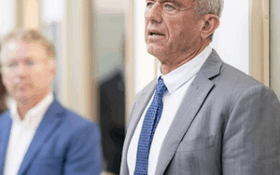
Stevens formally introduced articles of impeachment Wednesday against Health and Human Services Secretary Robert F. Kennedy Jr., a move dismissed by the Trump administration as “partisan theatrics” designed to boost her struggling campaign.
Stevens represents Michigan’s 11th Congressional District and is one of several far-Left Democrats vying to replace retiring Sen. Gary Peters.
The impeachment effort has virtually zero chance of advancing through the Republican-controlled House.
“RFK Jr. is the biggest self-created threat to our health and safety,” Stevens said. “Under his watch, families are less safe, healthcare costs are skyrocketing, and life-saving research, including here in Michigan, is being gutted.”
HHS spokesman Andrew Nixon fired back swiftly at the announcement.
“Secretary Kennedy remains focused on improving Americans’ health and lowering costs, not on partisan theatrics designed to elevate standing in a failing, third-rate Senate bid,” Nixon told the Daily Caller.
The impeachment articles, supported by the liberal group Stand Up for Science, accuse Kennedy of lying to Congress during his confirmation hearing, restricting vaccine access, cutting cancer research funding, and ending public comment periods for HHS rulemaking.
“And look, those are serious charges to levy to say RFK Jr. is costing lives,” Stevens said in an NBC News interview Tuesday night. “But he is purporting conspiracy theories and prohibiting medical research availability.”
The impeachment push comes as Stevens struggles in polling among a crowded Democratic primary field.
A Mitchell Research and Communications poll conducted November 18-21 showed Stevens with just a narrow lead at 27 percent, followed by state Sen. Mallory McMorrow at 24 percent and Bernie Sanders-endorsed former public health official Abdul El-Sayed at 16 percent, with 33 percent undecided. The poll of 261 Democratic primary voters had a margin of error of 6 percent.
Kennedy has repeatedly defended himself before Congress, stating at a May 14 Senate Health, Education, Labor & Pensions Committee hearing that HHS is not cutting “life-saving” research or firing “working scientists.”
Kennedy was confirmed as HHS secretary on February 13 in a largely party-line vote. He has implemented sweeping changes at the department that have angered Big Pharma donors.
Stevens, 42, was first elected to Congress in 2018 and has built a reputation as a vocal critic of everything the Trump administration does across multiple agencies.