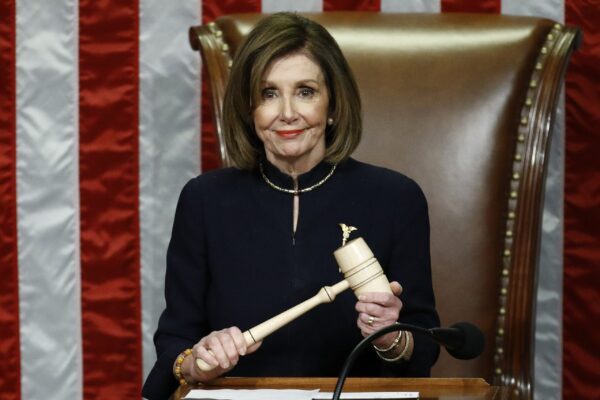
Former House Speaker Nancy Pelosi, D-Calif., and her husband have against ignited the debate over whether members of Congress and their families should be allowed to enrich themselves on the stock market using insider information.
For decades, critics argue that U.S. lawmakers’ access to sensitive information creates an unfair advantage in stock market trading, leading to calls for a comprehensive ban on these financial activities.
The latest controversy stems from a series of transactions made by Paul Pelosi between June 24 and July 1, 2024. These trades, disclosed in a legally required filing by wife Nancy Pelosi, include substantial investments in tech companies Broadcom and NVIDIA, as well as sales of Tesla and Visa stocks.
The Broadcom and NVIDIA purchases, each valued between $1 million and $5 million, have drawn particular attention due to their focus on the booming artificial intelligence sector, and the U.S. government’s recent subsidizing of computer chip manufacturers.
These trades come against a backdrop of seemingly impossibly impressive returns for the Pelosi portfolio.
According to data from Unusual Whales, the former Speaker of the House was up by 28% year-to-date as of June, significantly outperforming the S&P 500’s 11.5% return.
Critics argue that such consistently high returns raise questions about whether the Pelosis, and other members of Congress, may be benefiting from non-public information gained through their official duties.
“We are a free-market economy,” Pelosi said in December of 2022 in defense of her family trading. “We should be able to participate in that.”
Sen. Josh Hawley, a Republican from Missouri, has been a vocal advocate for banning congressional stock trading.
“It’s time to stop turning a blind eye to Washington profiteering,” Hawley said. “The American people deserve to know that their representatives are working for them, not for their own financial gain.”
Despite the growing calls for reform, implementing a comprehensive ban on congressional stock trading faces significant hurdles. Previous attempts to pass such legislation have stalled — many lawmakers simply refuse to regulate themselves.
As the debate continues, some investors have seized on the controversy as an opportunity, creating exchange-traded funds (ETFs) that aim to replicate the trading patterns of members of Congress. The success of these funds has only added fuel to the arguments of those calling for reform.
A trading strategy mimicking the Pelosi family’s common stock portfolio has reportedly achieved a compound annual growth rate of 22.79% since 2014.
For decades, Pelosi has consistently denied any impropriety. A spokesperson for Pelosi stated, “Speaker Pelosi does not own any stocks, and she has no prior knowledge or subsequent involvement in any transactions.”
But with public trust in government institutions at historic lows, advocates for reform argue that a ban on insider trading by Congress could be a crucial step towards restoring faith in the legislative branch.