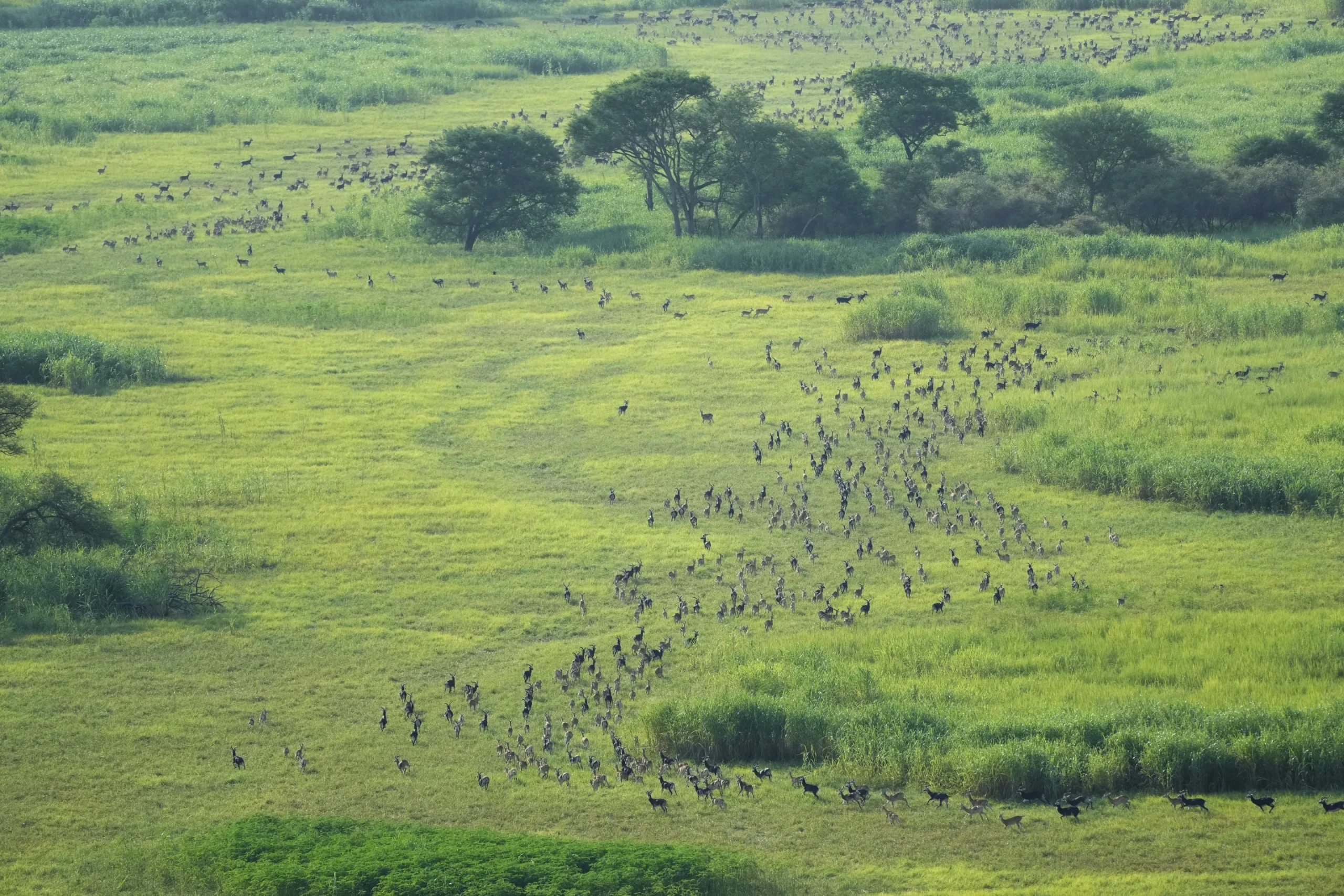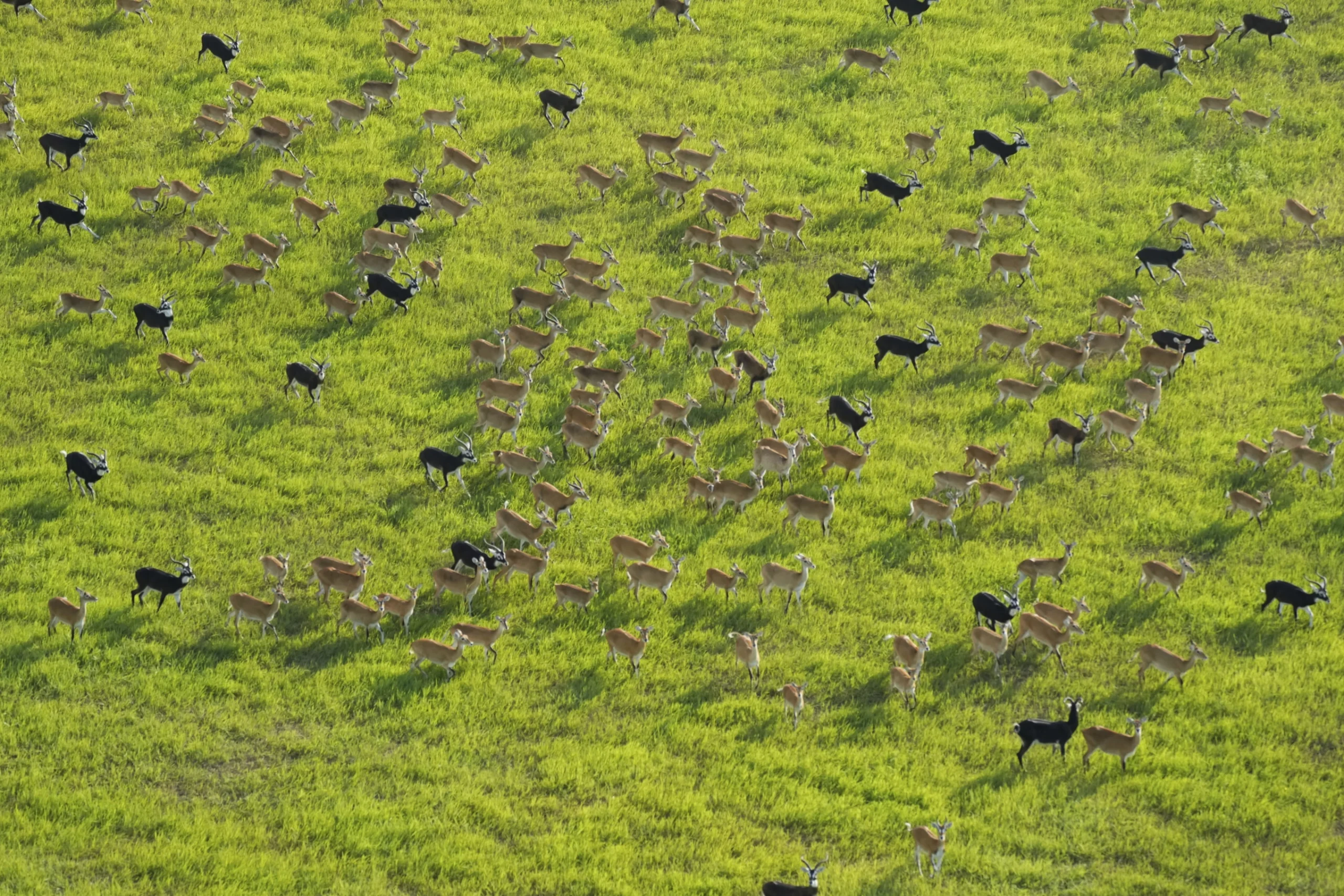
South Sudan is home to the world’s largest land mammal migration, with an estimated 6 million antelope roaming its vast grasslands.
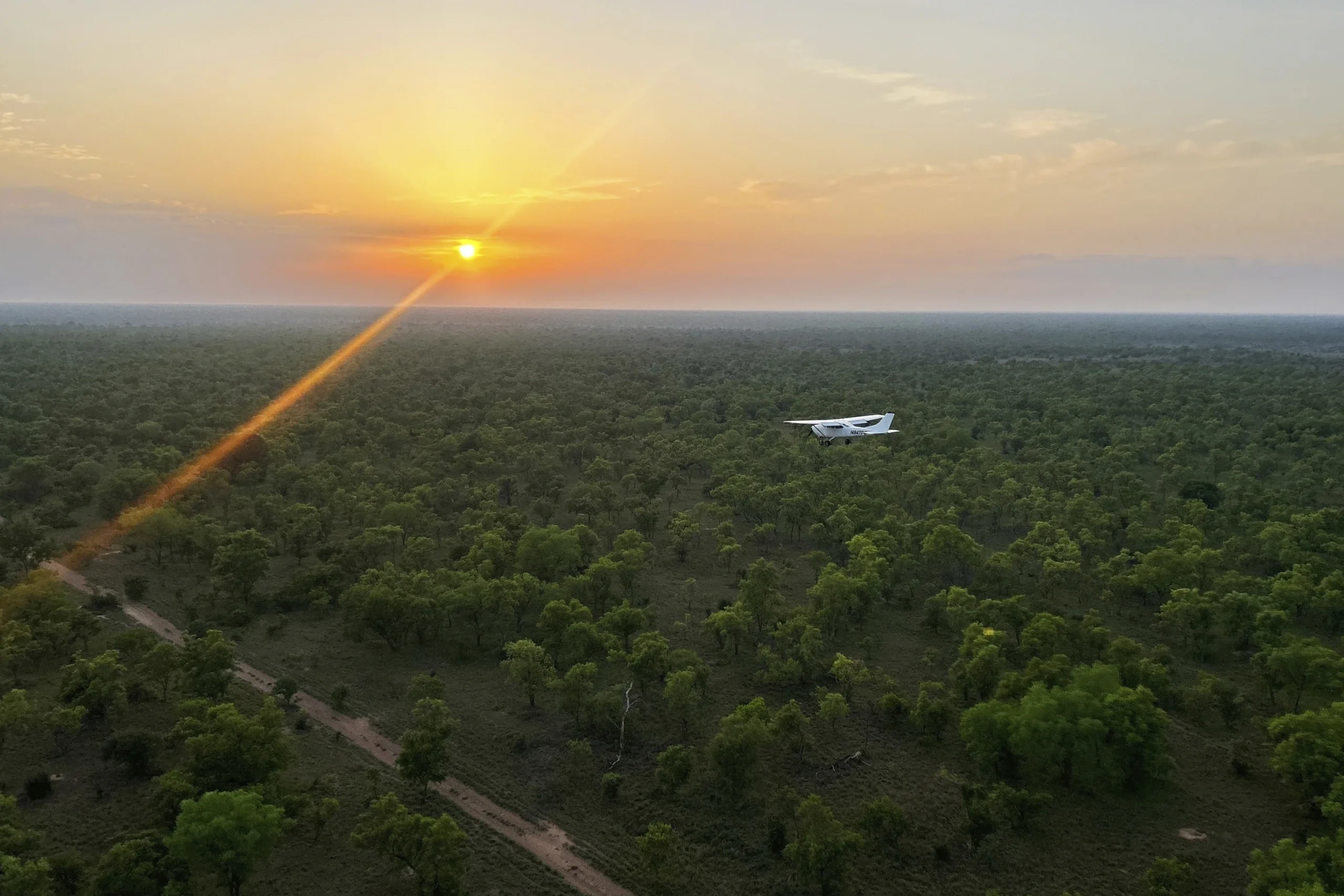
A comprehensive aerial wildlife survey, conducted by African Parks and the government, revealed the impressive number this week, far surpassing other famous migrations like the Serengeti’s wildebeest.
The migration spans two national parks and nearby areas, covering about 46,000 square miles. It includes four main antelope species: white-eared kob (about 5 million), tiang, Mongalla gazelle, and bohor reedbuck.
While the migrating antelope populations have increased since 2010, non-migratory species like hippos, elephants, and warthogs have seen a “catastrophic” decline over the past 40 years. The survey also noted a concerning rise in commercial poaching, with an estimated 30,000 animals killed monthly between March and May 2024.
South Sudan faces significant challenges in protecting its wildlife. The country is still recovering from a five-year civil war that ended in 2018, with ongoing violence in some areas. Limited government resources for wildlife protection and widespread poverty contribute to poaching pressures.
New roads have increased access to markets for bushmeat, while crop failures due to flooding have left some people with few alternatives but to hunt for food. The wildlife ministry receives less than 1% of the national budget, leaving rangers underpaid and outgunned by poachers.
Despite these challenges, there’s hope for conservation efforts. African Parks is working to create community-managed land conservancies and spread sustainable practices. The government sees potential in the migration as a source of national pride and future tourism, though significant infrastructure and security improvements would be needed.
Mike Fay, the conservation scientist who led the survey, emphasized the global importance of preserving this migration:
“Saving the last great migration of wildlife on the planet is an incredibly important thing. There’s so much evidence that the world’s ecosystems are collapsing, the world resources are being severely degraded and it’s causing gigantic disruption on the planet.”
As South Sudan works to protect its unique wildlife heritage, balancing economic development with conservation remains a crucial challenge.