Israeli troops fought with Hamas militants on the edges of Gaza City on Thursday in the slow march to try and free the hundreds of hostages still held by the radical Islamic terror group after a nearly four weeks of airwar sparked by Hamas’ deadly rampage in Israel.
U.S Secretary of State Antony Blinken was heading to the region for talks Friday in Israel and Jordan, after President Joe Biden suggested a humanitarian “pause” in the Gaza fighting to let in aid for Palestinians and let out more foreign nationals.
Roughly 800 people — including hundreds of Palestinians with foreign passports and dozens of wounded — have been allowed to leave Gaza over the past two days, under an apparent agreement among the U.S., Egypt, Israel, and Qatar, which mediates with Hamas.
Israel did not immediately respond to Biden’s suggestion of a humanitarian pause. Prime Minister Benjamin Netanyahu has previously ruled out a cease-fire, vowing to destroy Hamas rule in the Gaza Strip after its militants killed hundreds of men, women, and children on Oct. 7 and took some 240 people captive.
Arab countries, including those allied with the U.S. and at peace with Israel, have expressed mounting unease with the war. Jordan recalled its ambassador from Israel and told Israel’s envoy to remain out of the country until there’s a halt to the war and the “humanitarian catastrophe” it is causing.
A flurry of heavy explosions raised clouds of smoke over Gaza City on Thursday. Al-Jazeera television, which is funded by the Qatar government, continues to broadcast from the city. They claimed Israeli airstrikes were hitting an area of apartment towers in the Tel al-Hawa neighborhood.
There was no immediate comment by the Israel military on the strikes. Israel says it targets Hamas fighters and infrastructure and that the group endangers civilians by operating among them and in tunnels under civilian areas.
Hamas’ use of civilians as human shields has been well documented.
The Israeli military’s chief of staff, Herzi Halevy, said his forces were encircling Gaza City from several directions and “fighting in a built-up, dense, complex area.”
Israeli troops pushed into Gaza in larger numbers over the weekend. Hundreds of thousands of Palestinians remain in the path of the fighting in northern Gaza, despite Israel’s repeated calls for them to evacuate to the territory’s south, which is also being bombarded. Hamas often does not let civilians flee.
Palestinian militants fired antitank missiles, set off explosive devices and hurled grenades at Israeli troops during an overnight battle, the Israeli military said Thursday. It said soldiers returned fire and called in artillery and strikes. The report could not be independently confirmed.
Casualties on both sides are expected to rise as Israeli troops advance toward the dense residential neighborhoods of Gaza City. Israeli officials say Hamas’ military infrastructure, including tunnels, is concentrated in the city and accuse Hamas of hiding among civilians.
The Hamas-controlled Gaza Health Ministry said Thursday thousands have been killed, without providing a breakdown between civilians and fighters.
An Israeli reserve soldier died after a suspected militant opened fire on his car near a settlement in the West Bank on Thursday, the military and medics said.
Over 1,400 people have died on the Israeli side, mainly civilians killed during Hamas’ initial attack, also an unprecedented figure. Twenty Israeli soldiers have been killed in Gaza since the start of the ground operation.
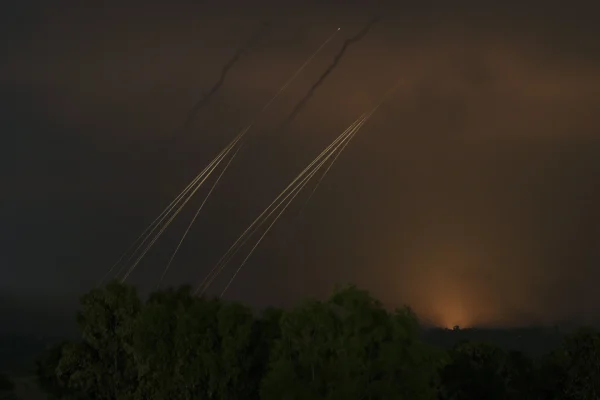
Rocket fire from Gaza into Israeli civilian centers, and daily skirmishes between Israel and Lebanon’s Hezbollah militants, has disrupted life for millions of Israelis and forced an estimated 250,000 to evacuate border towns. Most rockets shot at Israeli civilians are intercepted.
Residents of Gaza face an increasingly dire situation amid a territory-wide blackout. The World Health Organization said the lack of fuel for hospitals’ generators puts at risk 1,000 patients on kidney dialysis, 130 premature babies in incubators, as well as cancer patients and patients on ventilators.
Israel has refused to allow fuel in, saying Hamas is hoarding fuel for military use and would steal new supplies entering.
Halevi said Wednesday that when Israel is convinced that fuel has truly run out, it would be willing to allow in new supplies with supervision to ensure it does not reach Hamas. But Netanyahu told reporters that the war cabinet “has not approved any decision” to let in fuel.
The Associated Press contributed to this article.