Residents, and experts, across South Carolina are baffled about the origins of loud boom that rattled homes across the Palmetto State last Thursday.
The U.S. Geological Survey said the sound was a sonic boom, but questions remain about what caused it and why it was heard across such a wide area of South Carolina.
Residents from across the region reported hearing the boom and feeling their homes shake.
A mysterious sonic boom shook the heart of South Carolina on Thursday, May 28, according to the US Geological Survey (USGS).
Footage from Ryan Turiak shows the loud explosion shaking cameras at the Jim Hamilton-LB Owens Airport in Columbia.
The USGS confirmed that the rattling,… pic.twitter.com/N1vxrpAdoC
— ABC 7 Chicago (@ABC7Chicago) May 29, 2026
“It was scary. I jumped up from the couch and what was that? I mean, it sounded that loud, and the house kind of shook,” one resident said.
“I heard it and the house kind of shook,” another resident said.
“It was loud; it sounded like a crash. But I didn’t know that it was something that people heard all the way in Camden, too. So, that was like, OK, it probably wasn’t something that just sounded in Columbia; we thought something hit the side of the building,” a third resident said.
According to the U.S. Geological Survey, the sound was a sonic boom.
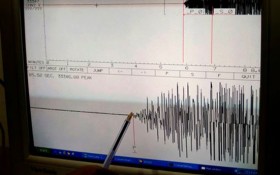
Dr. Erin Beutel, who works in the Department of Geology and Environmental Geoscience at the College of Charleston, said instruments measuring atmospheric pressure showed a significant increase as the sonic boom moved through the area. At the same time, seismometers did not record the side-to-side ground shaking typically associated with earthquakes.
She said a sonic boom occurs when an object moves through the atmosphere at extremely high speeds.
“It’s traveling through the air really fast, and as it does so, just like a boat through water, it is displacing air,” Beutel said.
“And when it gets going too fast, the air can’t get out of the way fast enough. So it pushes the air molecules … then, when that comes through, instead of being able to move out of the way, they clump up together. So, you get all the air molecules stuck together, and this cone kind of shows how they travel away from whatever was squishing them together.”
Local affiliate News19 contacted Fort Jackson and Shaw Air Force Base, and both said the sonic boom did not originate from their operations.
NASA and the American Meteor Society also said they had not received reports of meteor sightings associated with the event.
The American Meteor Society also told News19 it received a video showing a contrail in the sky but no visible fireball. Based on the timing of the sound and the contrail, officials said the boom was more likely caused by an aircraft exceeding the speed of sound than by a meteor.