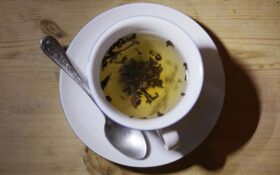
An American scientist has sparked a trans-Atlantic tempest in a teapot by offering Britain advice on its favorite hot beverage.
Bryn Mawr College chemistry professor Michelle Francl says one of the keys to a perfect cup of tea is a pinch of salt. The tip is included in Francl’s book “Steeped: The Chemistry of Tea,” published Wednesday by the Royal Society of Chemistry.
Not since the Boston Tea Party has mixing tea with salt water roiled the Anglo-American relationship so much.
The salt suggestion drew howls of outrage from tea lovers in Britain, where popular stereotype sees Americans as coffee-swilling boors who make tea, if at all, in the microwave.
“Don’t even say the word ′salt′ to us…” the etiquette guide Debrett’s wrote on X, formerly known as Twitter.
The U.S. Embassy in London intervened in the brewing storm with a social media post reassuring “the good people of the U.K. that the unthinkable notion of adding salt to Britain’s national drink is not official United States policy.”
“Let us unite in our steeped solidarity and show the world that when it comes to tea, we stand as one,” said the tongue-in-cheek post. “The U.S. Embassy will continue to make tea in the proper way – by microwaving it.”
The embassy later clarified that its statement was “a lighthearted play on our shared cultural connections” rather than an official press release.
“Steeped,” in contrast, is no joke. The product of three years’ research and experimentation, the book explores the more than 100 chemical compounds found in tea and “puts the chemistry to use with advice on how to brew a better cup,” its publisher says.
Francl said adding a small amount of salt — not enough to taste — makes tea seem less bitter because “the sodium ions in salt block the bitter receptors in our mouths.”
She also advocates making tea in a pre-warmed pot, agitating the bag briefly but vigorously and serving in a short, stout mug to preserve the heat. And she says milk should be added to the cup after the tea, not before – another issue that often divides tea lovers.
Francl has been surprised by the level of reaction to her book in Britain.
“I kind of understood that there would hopefully be a lot of interest,” she told The Associated Press. “I didn’t know we’d wade into a diplomatic conversation with the U.S. Embassy.”
It has made her ponder the ocean-wide coffee-tea divide that separates the U.S. and Britain.
“I wonder if we’re just a more caffeinated society — coffee is higher in caffeine,” she said. “Or maybe we’re just trying to rebel against our parent country.”
The Associated Press contributed to this article.