
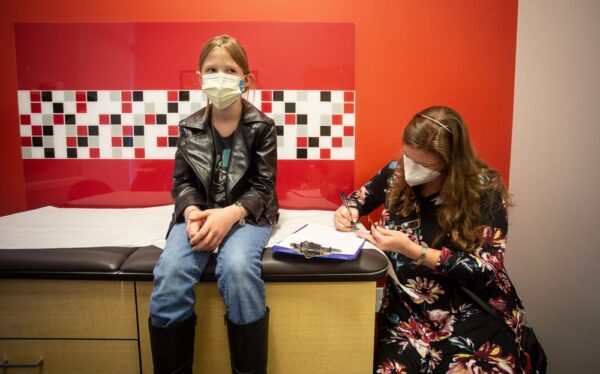
Vaccinations finally are available to U.S. children as young as 5, to the relief of some parents even as others have questions or fears.
Late Tuesday, the Centers for Disease Control and Prevention gave the final OK for youngsters age 5 to 11 to get kid-size doses of the vaccine made by Pfizer and its partner BioNTech. Pediatricians and other doctors’ groups praised the move and are gearing up to help families decide whether to vaccinate their children.
Like COVID-19 vaccines for adults and teens, they are free.
According to U.S. health authorities and leading doctors’ groups, elementary school-aged children should get vaccinated. Even though the virus tends to be more severe in adults than children, COVID-19 is causing plenty of preventable suffering among youngsters. About 1.9 million kids ages 5 to 11 have been diagnosed with COVID-19. Some 8,300 have been hospitalized, about a third needed intensive care, and at least 94 deaths have been verified.
That’s not counting the risk of a serious complication called multisystem inflammatory syndrome that can hit kids several weeks after they recovered from even a mild infection.
Vaccination also promises to help kids more safely resume school and social activities.
Kid doses are not the same as adult doses. Children ages 5 to 11 will receive a third of the dose given to teens and adults. That’s 10 micrograms per shot for youngsters, compared to 30 micrograms per shot for everyone 12 and older. Like everybody else, the younger kids will get two shots, three weeks apart.
This Food Grows Cancerous Tumors – Do Not Eat It [Sponsored]
In a study, Pfizer’s pediatric vaccine proved nearly 91% effective at preventing symptomatic infection. Vaccinated youngsters developed levels of virus-fighting antibodies as strong as teens and young adults who’d received the full-strength dose.
In the trial, the 5- to 11-year-olds had some annoying post-shot reactions, including sore arms and fatigue, similar to teens and young adults but were less likely to have fevers. Altogether, the study includes 4,600 youngsters, 3,100 of them given the vaccine and the rest dummy shots. The FDA found no safety concerns.
Tens of millions of the larger doses have been given safely to Americans 12 and older. One very serious side effect has come to light — heart inflammation — but it remains rare.
These rare reactions have occurred mostly in young men or teens boys, usually after the second dose, and they tend to recover quickly. To put the risk in context, doctors say COVID-19 infection can cause more serious heart inflammation. One theory is that testosterone and puberty play a role, which is partly why experts expect any risk to younger kids would be even lower.
The shots are being offered at pediatricians’ offices, health clinics and pharmacies. Some school systems also plan to host vaccination clinics, too. Two drugstore chains will start giving the shots this weekend: Walgreens on Saturday and CVS on Sunday.
Some children are getting the corona vaccine at the same time as the flu shot. The CDC says COVID-19 shots can be given at the same visit as vaccines for the flu, or other routine vaccinations a child — or anyone else — may require.
The CDC has recommended vaccinations for youngsters but not mandated them.
Nearly 70% of 5- to 11-year-olds hospitalized for COVID-19 have had other medical problems, including obesity and asthma. But sometimes the otherwise healthy get seriously ill, too. And given the profound social, mental health and educational impact the pandemic has had on youngsters, health authorities made clear that all children should be vaccinated. There also are equity concerns, as more than two-thirds of youngsters who’ve been hospitalized are Black or Hispanic.
Even if a child has already had corona, he or she should still should be vaccinated once they’ve recovered, according the CDC. It’s clear that prior infection does provide some protection against another bout but that immunity can vary depending on how seriously ill someone was, and how long ago. Studies of adults have found that vaccination after infection can dramatically boost protection.
In the U.S., Pfizer’s vaccine remains the only choice for children at this time.
Moderna’s similar vaccine is used by teens in some other countries and is being tested in younger children but isn’t yet available for Americans under age 18.
Children under five years of age are not yet eligible for the corona vaccine. Pfizer and Moderna are testing low doses in babies and preschoolers.
The Associated Press contributed to this article.