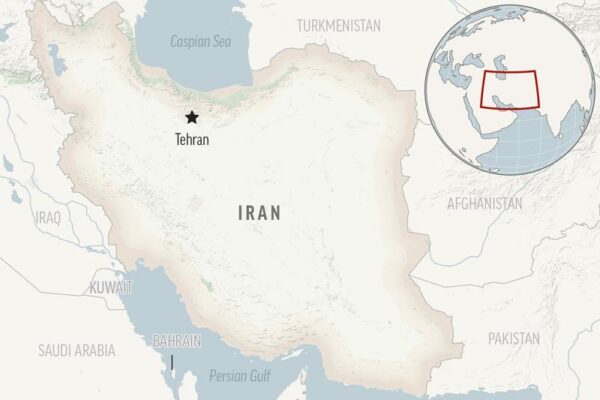
Iran rejected President Trump’s 15-point ceasefire proposal on Wednesday and issued a sweeping counterdemand of its own through state television.
Iranian leadership is demanding the closure of every American military base in the Persian Gulf, war reparation payments from the U.S., full sanctions relief, and the guarantee of permanent Iranian control over the Strait of Hormuz.
The rejection came as Iran launched fresh missile and drone attacks on Israel and Gulf Arab nations, including a strike that ignited a fire at Kuwait International Airport.
Trump’s 15-point peace plan, transmitted to Tehran through Pakistani intermediaries, addressed sanctions relief, a rollback of Iran’s nuclear program, missile limits, and the reopening of the Strait of Hormuz.
Pakistan, which has Shia ties to Iran and no American bases on its soil, had positioned itself as a neutral facilitator. Pakistani Prime Minister Shehbaz Sharif regularly tags Trump, U.S. envoy Steve Witkoff and Iranian Foreign Minister Abbas Araghchi on social media to signal his country’s readiness to broker talks.
Iran’s response to the peace place through state broadcaster Press TV was blunt.
“Iran has responded negatively to an American proposal aimed at ending the ongoing imposed war,” the outlet said. “The end of the war will occur when Iran decides it should end, not when Trump envisions its conclusion.”
A U.S. official described the IRGC’s demands as “ridiculous and unrealistic,” according to Fox News.
Iran simultaneously denied that any formal negotiations are underway — even as Trump said Monday that U.S. envoys Steve Witkoff and Jared Kushner had held talks with Iranian counterparts over the weekend and that the discussions had been “very good and productive.”
Egyptian and Pakistani officials said Wednesday that mediators were pushing for in-person negotiations as early as Friday in Pakistan.
The war now entering its 27th day has already killed 13 U.S. service members. Between 2,000 and 3,000 Army paratroopers from the 82nd Airborne Division have received orders to deploy to the Middle East, which would bring total U.S. ground forces next to Iran to between 6,000 and 8,000 troops.
Iran’s missile blockade of the Straight of Hormuz has driven global energy prices sharply higher since the war began.