Iran is seeking to resume nuclear negotiations with the Trump administration but will not shift from conditions it held before the United States and Israel bombed and destroyed Iranian nuclear facilities in June.
“They have to make the first move to show that they are ready to engage with us on the conditions that we put… it has to be based on equal footing and mutual respect,” said Kamal Kharrazi, foreign policy adviser to Supreme Leader Ayatollah Ali Khamenei. “The agenda would be prepared in advance to ensure the clarity of substance and the process of discussions.”
Iran will continue uranium enrichment because the country needs fuel for its power plants and for medical purposes, he said. Tehran’s ballistic missile program, which Kharrazi said is expanding, will also be off the negotiating table.
“It is only the nuclear issue we will discuss with the United States,” he said. “Unfortunately, President Trump does not believe in diplomatic engagement but rather prefers to use force to achieve his objectives.”
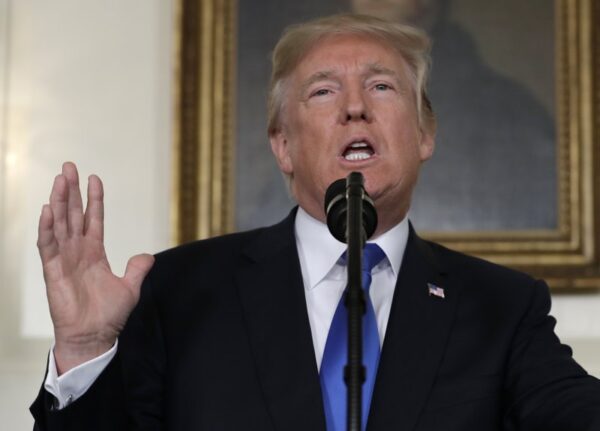
President Donald Trump said Tuesday that Iran is “very much” signaling interest in a peaceful deal with the United States over its nuclear program.
The Trump administration and Iran were in talks in June when Israel launched a very successful air attack on Iran, eventually drawing in Washington, which carried out strikes on three Iranian nuclear facilities with B-2 bombers equipped with bunker buster bombs.
The strikes was the first direct U.S. attack inside Iran.
During Iran-U.S. talks in the summer, Washington had insisted that Iran stop enriching uranium altogether, while Tehran said they would continue domestic enrichment to a purity that cannot be used to build nuclear bombs. Highly enriched uranium is a key component of a nuclear weapon.
Kharrazi said the “degree of enrichment,” not enrichment itself, would be the focus of potential negotiations with the United States.
“If there would be genuine negotiations between Iran and the United States, there are ways and means how to ensure that Iran can continue its enrichment and at the same time assure the others that it’s not going to look for nuclear weapons,” Kharrazi said.
Kharrazi also had a message for Trump.
“Start with a positive approach with Iran. If it will be positive, certainly it will be reciprocated. But for that, they have to refrain from any force against Iran,” he said. “They have tried that and they now understand that it’s not acceptable and it’s not workable.”
The Trump administration has discussed helping Iran access as much as $30 billion in frozen funds to build a civilian-energy-producing nuclear program, in addition to easing international sanctions.. Trump administration officials emphasized that several proposals have been floated, but with one non-negotiable point: absolutely zero Iranian enrichment of uranium.
Trump withdrew the United States from the 2015 nuclear deal with Iran during his first term in 2018, calling it a bad deal. Since, Trump has been pushing for a better deal with Iran.
“I think everybody agrees that doing a deal would be preferable to doing the obvious. And the obvious is not something that I want to be involved with,” Trump said earlier this year. “Iran cannot have a nuclear weapon, and if the talks aren’t successful, I actually think it’ll be a very bad day for Iran.”
Iran’s economy has deteriorated dramatically since Trump withdrew from the nuclear deal in 2018.
The country has faced years of protests, a significantly weakened currency, and a cost-of-living crisis. Iran also lost its main ally in the Middle East when the Assad regime collapsed in Syria, and Israel killed most of the senior leadership of the radical Islamic terror group Hezbollah, Iran’s proxy in Lebanon.