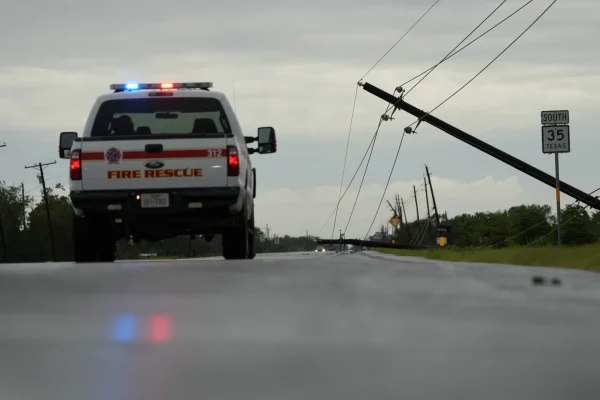
Hurricane Beryl made landfall as a Category 1 storm near Matagorda, Texas, early Monday morning, bringing devastating winds, torrential rain, and significant storm surge to the region. The hurricane, the first to hit Texas in three years, has already claimed two lives and left over 2.6 million residents without power.
The storm roared ashore around 4 a.m. local with maximum sustained winds of 80 mph, quickly causing widespread destruction.
In Houston, wind gusts reached 84 mph at Hobby Airport, while the city’s downtown area saw extensive flooding. The White Oak Bayou rose an alarming 25 feet in just six hours, contributing to widespread street closures and complicating emergency response efforts.
Tragically, two fatalities have been confirmed. A 53-year-old man in Humble and a 74-year-old woman in Bammel were both killed when trees fell on their homes, according to Harris County Sheriff Ed Gonzalez.
Coastal areas bore the brunt of Beryl’s fury, with Surfside Beach, 55 miles south of Houston, reporting severe damage to numerous homes. A storm surge of 9.5 feet was recorded at the Port of Houston Wharves, just 6.5 miles southeast of downtown Houston.
The storm’s impact extends far beyond the immediate coastal area. Nearly 1,000 flights have been cancelled at Houston’s airports, potentially causing nationwide travel disruptions. AccuWeather predicts rainfall totals could reach up to 24 inches in some areas of eastern Texas, raising concerns about prolonged flooding.
As Beryl moves inland, it continues to pose significant threats. The National Weather Service warns of an ongoing risk of tornadoes, while AccuWeather forecasters caution about dangerous heat conditions later in the week, with temperatures potentially reaching over 100 degrees in areas still without power.
Emergency response efforts are underway, with authorities urging residents to stay indoors if possible and exercise extreme caution due to flooding, downed power lines, and debris.
The full extent of Beryl’s impact is still unfolding, and officials warn that recovery efforts could take weeks or even months in the hardest-hit areas.
Beryl’s destructive path began in the Caribbean, where it caused at least 11 deaths before making landfall in the United States. As the storm continues to move inland, officials are now warning of potential flooding in the Midwest and Northeast in the coming days.