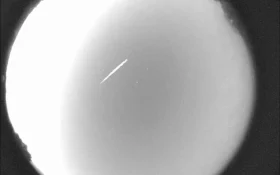
The Eta Aquarid meteor shower, remnants of Halley’s comet, peaks this weekend. And with just a waning crescent moon in the sky, it should be visible.
The Eta Aquarids occur every year in early May. This year’s peak activity happens early Sunday with an expected 10 to 30 meteors visible per hour in the Northern Hemisphere. Viewing should be even better in the Southern Hemisphere. The shower lasts through May 27.
Here’s what to know about the Eta Aquarids and other meteor showers.
What is a meteor shower?
Multiple meteor showers occur annually and you don’t need special equipment to see them.
Most meteor showers originate from the debris of comets. The source of the Eta Aquarids is Halley’s comet.
When rocks from space enter Earth’s atmosphere, the resistance from the air makes them very hot. This causes the air to glow around them and briefly leaves a fiery tail behind them — the end of a “shooting star.”
The glowing pockets of air around fast-moving space rocks, ranging from the size of a dust particle to a boulder, may be visible in the night sky.
How to view a meteor shower
Meteor showers are usually most visible between midnight and predawn hours.
It’s easier to see shooting stars under dark skies, away from city lights. Meteor showers also appear brightest on cloudless nights when the moon wanes smallest.
The Southern Hemisphere will have the best view of Eta Aquarids, but a waning moon just 14% full will allow for clear viewing in both hemispheres, according to the American Meteor Society.
When is the next meteor shower?
The meteor society keeps an updated list of upcoming large meteor showers, including the peak viewing days and moonlight conditions.
The next big one is the Southern Delta Aquarid meteor shower, which peaks in late July.
The Associated Press contributed to this article.