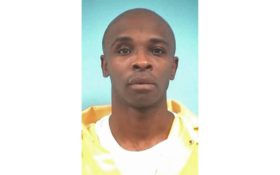
The Mississippi Supreme Court should overturn an “astonishing” 12-year prison sentence given to an African American man who took a mobile phone into a jail cell when he was arrested on a misdemeanor charge, attorneys argued in court papers filed Thursday.
The state’s high court upheld Willie Nash’s sentence Jan. 9. Critics have slammed the case an example of racial injustice.
The new appeal asks justices to reconsider and reverse their own decision. The appeal doesn’t mention race, but it notes that the case drew international condemnation. It also says Nash received a longer sentence for possessing a cellphone in jail than Mississippi courts would impose for second-degree arson or poisoning someone with the intent to kill.
“Nash’s astonishing sentence is grossly disproportionate to the act for which he stands convicted. It is cruel and unusual,” Will Bardwell, an attorney for the Southern Poverty Law Center, wrote in the appeal Thursday.
There’s no proof Nash was searched for a cellphone before being booked into the jail, Bardwell wrote. The appeal also says Mississippi is one of only three states where a 12-year sentence for having a cellphone in jail is even possible. Research found no cases of such a long sentence being given in the other two states, Arkansas and Illinois.
“There is no indication that anyone outside Mississippi has ever received a sentence as long as Nash’s for doing what Nash did,” Bardwell wrote.
Nash, now 39, didn’t seek to overturn his conviction, but argued on his first appeal that his August 2018 sentence was grossly disproportionate, violating the constitutional ban on cruel and unusual punishment.
Mississippi justices unanimously rejected his argument.
“Though harsh, Nash’s sentence falls within the statutory range,” Justice James Maxwell wrote for the high court Jan. 9.
A 2012 Mississippi law sets a sentencing range of three to 15 years for inmates found with deadly weapons, cellphones or components of cellphones in state jails and prisons.
Corrections officials have said for years that contraband cellphones are a problem in Mississippi’s jails and prisons. During an outbreak of violence that left five inmates dead and an undisclosed number of others injured between Dec. 29 and Jan. 3, inmates used cellphones to take photos and videos that showed prisoners sleeping on the floor of a crowded cell and smoke filling a corridor and cells at the Mississippi State Penitentiary at Parchman.
One of the justices who joined in the unanimous ruling Jan. 9 said that while the sentence is legal, the prosecutor and trial judge could have avoided punishing Nash entirely.
Justice Leslie King is currently the only African American justice on the nine-member court. He wrote that Nash’s case “seems to demonstrate a failure of our criminal justice system on multiple levels” because it’s not clear whether Nash was properly searched or told not to take his phone into his cell.
Sentencing reform advocates expressed outrage, and Leonard Pitts, a nationally syndicated Miami Herald columnist, published Gov. Tate Reeves’ phone number, urging readers to tell Reeves to “let my people go.”
Court records show Nash asked an employee at the Newton County jail for “some juice” and then willingly handed over his phone. The employee thought Nash wanted something to drink before realizing he wanted electricity to power the device.
The jailer gave the phone to a deputy sheriff, who later unlocked it using the pass code Nash provided. The deputy found the phone had photos and messages belonging to Nash.
The trial judge told Nash to “consider yourself fortunate” in getting the 12-year sentence, because Nash had previous burglary convictions and could have been sentenced as a habitual offender to the full 15 years without the possibility of early release. The Supreme Court noted that Nash could get out after serving 25% of his sentence, or three years.
King called Nash’s case an example of why prosecutors and judges have “wide discretion.” King wrote that Nash had served time for the previous convictions and stayed out of trouble for years. He also wrote the cellphone possession was a “victimless” crime based on a failure of the booking procedure.
“Nash did not do anything nefarious with his phone, and he certainly did not hide his phone from law enforcement,” King wrote.
The Associated Press contributed to this article