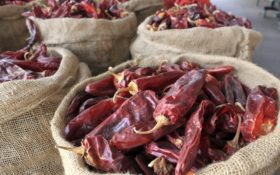
It’ll be one giant leap for chile-kind.
A hybrid version of a New Mexico chile plant has been selected to be grown in space as part of a NASA experiment.
The chile, from Española, New Mexico, is tentatively scheduled to be launched to the International Space Station for testing in March 2020, the Albuquerque Journal reports .
A NASA group testing how to produce food beyond the Earth’s atmosphere and the chile plant was created with input from Jacob Torres — an Española native and NASA researcher.
Torres said the point of sending the chiles into space is to demonstrate how NASA’s Advanced Plant Habitat – which recreates environmental needs for plant growth like Co2, humidity and lighting – works not only for leafy greens, but for fruiting crops, as well.
“Which means that if we do go on a deep space mission, or we do go to the moon or a mission to Mars, we will have to figure out a way to supplement our diets,” he said. “Understanding how to grow plants to supplement the astronaut’s diet would be essential to our mission to going to Mars. So that kind of fuels our research that we’re doing now.”
The “Española Improved” chile plant is a cross between a northern New Mexico seed and the popular Sandia seed from the Hatch Valley. It will be the first fruiting plant that the U.S. will grow aboard the Space Station.
NASA’s astronauts have previously grown greens, and a zinnia bloomed in space in 2016.
Matthew W. Romeyn, NASA’s lead scientist on the pepper project, said in an emailed statement that the group chose the Española-Sandia hybrid because of the shorter growth cycle, as well as its ability to thrive within the smaller confines of the Advanced Plant Habitat. The growth period may be longer in space.
“As a bonus, the Española Improved is one of the few chile pepper cultivars from the Hatch Valley that is also regularly consumed red, so we can leave it to the crew to decide if they would like their chile peppers green or to wait for the fruit to fully ripen to red,” Romeyn said.
Chiles could even boost morale, Torres said, when astronauts have something tasty and different from the pre-packaged meals.
“Just by having something fresh to eat, a type of crop you grew yourself, being away from home for a long time, that picks up your morale, it brings positivity and adds to the mission that you’re doing,” he said. “That’s one important aspect of the research that we’re doing.”
The Associated Press contributed to this article