
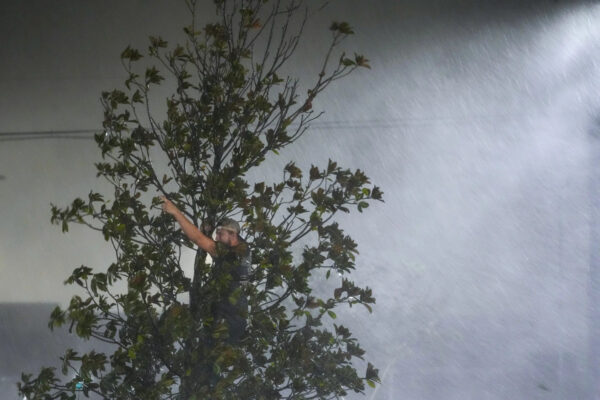
Hurricane Milton, one of the most powerful storms to hit Florida in recent years, has left a path of devastation across the state, causing widespread flooding, wind damage, and power outages. As the storm moves off the Atlantic coast, Floridians are beginning to assess the damage and start the long process of recovery.
Milton made landfall as a Category 3 hurricane at 8:30 p.m. on October 9 near Siesta Key, south of Tampa Bay. The storm, which had earlier reached peak winds of 180 mph over the Gulf of Mexico, brought intense rainfall, strong winds, and significant storm surge to much of central and eastern Florida.
The storm’s impact has been severe and wide-ranging Parts of southern Pinellas County, coastal Hillsborough County, and western Manatee County received 10 to 17 inches of rain. Tampa broke a 100-year-old monthly rainfall record in just one day, with over 11 inches of rain causing waist-deep flooding in parts of the city.
Hurricane-force winds swept through much of Central Florida, with gusts reaching 105 mph in Egmont Channel and 102 mph in Sarasota. St. Petersburg’s Tropicana Field suffered serious roof damage, and several cranes in downtown Tampa were damaged.
This is devastating.
Tropicana field (which was being used as a shelter) roof was destroyed by Hurricane Milton.
— Graham Allen (@GrahamAllen_1) October 10, 2024
Water levels rose about 8 feet near Sarasota close to landfall. Naples saw a storm surge of 5.75 feet, while parts of northeast Florida continue to face surge threats.
Over 3.25 million energy customers across Florida are without power, with some areas like Hardee County seeing almost all connections down.
The storm also spawned numerous tornadoes, with at least three dozen reports across southern and central Florida. Four deaths have been confirmed in St. Lucie County due to tornado activity.
Despite the widespread damage, there is some relief that the impact wasn’t worse in some areas.
Tampa Mayor Jane Castor reported no extensive injuries or deaths in the city, crediting the public’s response to evacuation orders.
“I really think it’s due to Hurricane Helene,” Castor said, referring to the recent storm that heightened public awareness. “When people get to see firsthand the power of Mother Nature, it’s very impactful, literally and figuratively.”
Recovery efforts are now underway, and over 70,000 people having taken refuge in government shelters during the storm.
As of early Thursday morning, Milton had weakened to a Category 1 hurricane with 85 mph winds and was located about 75 miles east-northeast of Cape Canaveral.
While the worst of the storm has passed for most of Florida, authorities warn that dangers persist.
“The wind, even though it’s decreasing, the threats are not decreasing,” Criswell cautioned. “With the increased amount of rain, with the threat of flash flooding happening, you need to stay put. Don’t go out, try to make sure you’re as safe as possible.”