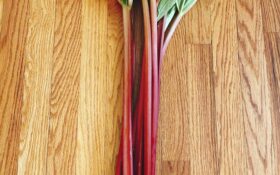
The good news is that for those who have difficulty finding it at the supermarket – or simply want to grow their own – adding rhubarb to the garden is a worthwhile endeavor, albeit one that requires patience.
Perennial in horticultural zones 3-8, rhubarb can be expected to return and produce for up to 10 years. Plant their crowns, which are bare-roots, in fall or in spring when the weather is still cool. They will spread, so give them room by setting them 3-4 feet apart in similarly spaced rows. Bury their buds, or “eyes,” 2 inches below the soil line, ensuring they face upward in compost-enriched soil.
Keep plants well-watered and, when the weather warms up, apply 2 inches of mulch to retain moisture, discourage weeds and regulate soil temperature. Then apply a slow-release, balanced fertilizer with a 10-10-10 ratio of nutrients.
Do not harvest any stalks during rhubarb’s first year in your garden. Doing so would imperil the plant’s longevity. But remove flowers and their stems so the plant can channel its energy into root growth instead of seed production. Replenish mulch in late fall, after temperatures drop.
You can start harvesting – sparingly – in the plant’s second year, removing no more than four stalks per plant when they are red (unless you’re growing a pink or green variety) and between 12-18 inches long. Taking more would risk sapping the plant of energy, which would reduce future output, so practice restraint.
You may harvest freely during and after the third year, but never remove more than two-thirds of a single plant.
Rhubarb leaves are poisonous, so remove and discard them before slicing the stalks into 1-inch pieces for cooking.
I repeat: Do not eat the leaves.
The vegetable, regarded as a fruit just as tomatoes are fruits commonly regarded as vegetables, isn’t a one-trick pony, either. It works equally well in jams, relish, muffins and even simmered for 10 minutes, then blended with fruit into smoothies. Try roasting, stewing, sautéing and serving over ice cream, or adding it to apple sauce recipes. Just don’t forget the sweetener.
The Associated Press contributed to this article.